




Blog / Michael Bates Chevrolet

Chevrolet Traverse vs. Tahoe: Which 3-Row SUV Is Right for You?

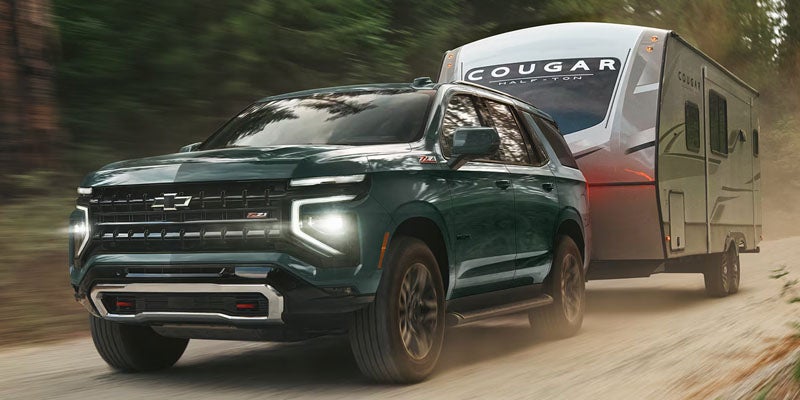
Dark green Chevrolet Tahoe towing a travel trailer along a forest dirt road.

If you're shopping for the best 3-row SUV for Detroit, Michigan families, two names keep coming up: the Chevy Traverse and the Chevy Tahoe. They’re both incredibly spacious inside, bring serious capability, and the reliability Chevy is known for—but they fit different drivers and families. Understanding what sets them apart can help you make a confident decision before you ever set foot in a showroom.


Size and Dimensions


Size is the clearest difference between the Chevy Traverse and Tahoe, though both are 3-row SUVs. The Traverse is a crossover SUV, which means it rides on a car-based platform and fits more comfortably in tight parking lots and city streets. The Tahoe, on the other hand, is a full-size body-on-frame SUV with a noticeably larger footprint—about 7” taller and longer than the Traverse. That translates inside too. If maximum interior volume and commanding road presence matter most to you, the Tahoe delivers that in a big way.


Seating and Passenger Space


Both the Traverse and Tahoe seat up to 8 passengers across 3 rows, but the Tahoe's larger body gives rear passengers more legroom. The 2nd row gets a half inch more than the Traverse, while the biggest difference is in the 3rd row. The Traverse’s 3rd row provides 32.1” of legroom which is best suited for kids and shorter trips. The Tahoe offers 34.9” of 3rd-row legroom, on the other hand. Families who regularly carry adults in all 3 rows may find the Tahoe's extra space more practical. For most day-to-day family use, the Traverse holds its own as one of the best 3-row SUV options for Detroit drivers.


Towing and Performance


This is where the Tahoe clearly pulls ahead. The Tahoe’s truck-based platform and choice of 3 potent engines, including a choice of 2 V8s that top out at 420 hp and 460 lbs.-ft. of torque and a diesel option, make it a towing powerhouse. It can pull up to 8,400 lbs. with its 355-hp V8 engine option.

The Traverse is a capable crossover with a robust 2.5L turbo engine that delivers 328 hp and 326 lbs.-ft. of torque, but its towing capacity is considerably lower than the Tahoe's at 5,000 lbs. If you regularly pull a boat, camper, or trailer, the Tahoe is the more practical pick. Drivers with lighter towing needs or none at all will likely find the Traverse more than sufficient for everyday life.


Fuel Efficiency and Daily Driving


The Traverse tends to be the more fuel-friendly option for everyday commutes and errands, getting you 23 MPG combined in front-wheel drive and 21 MPG combined in its optional all-wheel drive configuration—which is kind of a must-have for Detroit drivers. Its crossover construction and turbo engine are well-suited to highway driving and city traffic, giving you up to 27 MPG on the highway.

The Tahoe's truck-based build and larger engine choices naturally use more fuel by comparison. The V8 engines give you between 16 and 17 MPG combined. However, the Duramax® 3.0L Turbo-Diesel engine is especially efficient, returning 21/28 city/highway MPG for a combined 24 MPG. If you tow a boat, trailer, or drive long distances, that diesel option is clearly the way to go. For drivers in Woodhaven, Michigan, who spend most of their time on surface roads or shorter highway trips, the Traverse may be the more economical choice over time.


Which One Is Right for You?


Choosing between the Chevrolet Traverse vs. Tahoe really comes down to your lifestyle. If you want a versatile, everyday family SUV that's easy to drive and budget-friendly, the Traverse is a strong choice. If you need serious towing capability, maximum passenger room, or prefer a full-size feel, the Tahoe is worth the investment. Either way, both models are worth exploring in person.


Explore Both Models at Michael Bates Chevrolet


Whether the Chevrolet Traverse vs Tahoe debate is still undecided for you, the team at Michael Bates Chevrolet is ready to help. Woodhaven, Michigan drivers and anyone in the Detroit area can check out our current inventory, compare trims, and schedule a test drive at https://www.michaelbateschevy.com. Finding your next great 3-row SUV starts here.

Posted in:

Related Posts

Technician securing a blue car to a tow truck’s loading platform.

Winter Car Maintenance: What Michigan Drivers Should Do Before the Cold Sets In

Michigan winters are no joke. Between lake-effect snow, black ice, and temperatures that can plunge well below freezing, the roads around Woodhaven, Michigan demand that your vehicle is fully prepared before the season hits. Knowing how to approach winter car maintenance Michigan-style can mean the difference between a smooth commute and a stressful situation on the side of the road. Why Michigan Winters Demand Special Attention From Chevrolet Owners Michigan's climate puts serious stress on vehicles. Frequent temperature swings cause fluids to thicken, tire pressure to drop, and batteries to lose their charge faster than usual. For Chevrolet owners, staying ahead of these issues means your truck, SUV, or car continues to perform reliably all season long. The winter car maintenance that Michigan drivers should prioritize goes beyond just putting on snow tires—it's a full-vehicle check that sets you up for safe driving no matter what the forecast brings. Check Your Battery Before Temperatures Drop Cold weather is one of the most common causes of battery failure. A battery that performed fine in October might struggle to start your vehicle when January hits, and nobody wants that. Have your battery tested to confirm it holds a proper charge. If your Chevy is a few years old and the battery hasn't been replaced recently—or you have an older vehicle with a battery reaching its 3 rd birthday, this is the right time to address it. A quick inspection from a qualified technician can save you from being stranded on a cold morning. Inspect Your Tires for Winter Readiness Nobody needs to tell you that tire condition and pressure are critical maintenance during Michigan winters. Cold air causes tire pressure to drop roughly 1lb./sq. in. for every 10-degree decrease in temperature, so check your pressure regularly throughout the season. If your tread depth is low, all-season or dedicated winter tires will give you significantly better grip on snow and ice while also improving fuel efficiency. Proper winter car maintenance Michigan drivers rely on always includes a close look at all 4 tires and the spare before the season gets underway. If you did a lot of driving this summer, frequently tow or off-road, or your vehicle is front or rear-wheel drive, getting a tire rotation is maybe in order. Check Fluids, Brakes, and Wipers Several other systems need attention before winter arrives. Your coolant should be tested to ensure it's properly mixed to handle Michigan's low temperatures. Windshield washer fluid should be a winter-rated formula to avoid freezing on contact with your glass. You’re your wipers for streaking and cracks on the blades and make sure your defroster is up to par. Swapping out your wiper blades for winter-rated ones will also keep your visibility clear during heavy snow. Change that cabin air filter so it works at its best—and so you don’t drive with the windows up and a filter full of pollen from summer. And of course, brake performance is especially important on slippery roads. Have your brake pads and rotors inspected if it's been a while. If you’ve heard squealing, grinding, or felt vibration through the pedal, it’s high time you got in for a service appointment. Let a Certified Technician Handle the Hard Work While there are things you can check on your own, a thorough multi-point inspection from a trained technician gives you real peace of mind. Chevrolet service near Detroit is available at Michael Bates Chevrolet, where the team is equipped to inspect, diagnose, and prepare your vehicle for everything Michigan winter throws at it. From fluid top-offs to tire rotations and battery checks, Chevrolet service near Detroit means you don't have to guess whether your Chevy is winter-ready. Visit Michael Bates Chevrolet to Get Winter-Ready Winter car maintenance Michigan drivers need is easier to manage when you have a trusted service team in your corner. Whether you drive a Silverado, Equinox, Tahoe, or Traverse, the certified technicians at Michael Bates Chevrolet in Woodhaven, MI are ready to help. Don't wait until the first snowstorm to find out your vehicle isn't prepared - schedule your winter service appointment today at https://www.michaelbateschevy.com/.

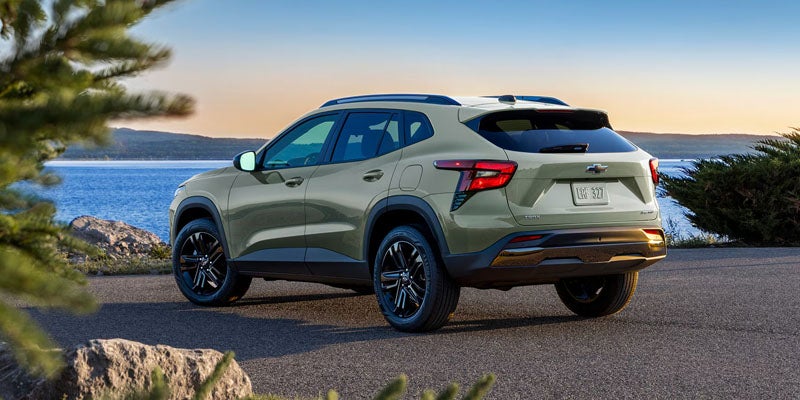
Light green Chevrolet Trax parked beside a lake at sunset.

Chevrolet Equinox vs. Trax: Which SUV Is Right for You?

The Chevy Equinox and the Chevy Trax are 2 of the most popular options in the Chevy SUV lineup, and there are plenty of reasons why. Both vehicles bring everyday practicality from their smart layout to fuel efficiency, connectivity and safety tech, and a fun-to-drive feel—but their differences make them the right fit for different drivers. Whether you're commuting solo across Woodhaven, Michigan or hauling the whole family around town, understanding the differences between these two models is crucial to getting you behind the wheel of the right one. Size and Space The Trax is a subcompact SUV, making it a natural fit for drivers who want something easy to park and maneuver around town. It still offers a surprisingly comfortable interior for its size, with a 38.7” of rear legroom and 25.6 cu. ft. of cargo space for groceries, weekender bags, or sports gear—even with a full house of passengers. Fold the rear seats down and that opens up over 54 cu. ft. The Equinox, on the other hand, steps up to the compact SUV class, delivering noticeably more cabin space and cargo room. Almost 40” of rear legroom, 30 cu. ft. of everyday-usable cargo space behind the 2 nd row and a max of 63.5 cu. ft. of space gives you more adaptability if you usually travel with more than 2 passengers. That extra cargo space makes a big difference for families as well who have groceries, backpacks, and other everyday stuff to pack in the back. The Equinox brings a real edge in this category. Performance and Efficiency Here’s where it gets interesting. When comparing the Chevrolet Equinox vs. Trax on the road, both models deliver a smooth, composed ride, but their focuses are different. The Trax is powered by a 1.2L turbocharged engine with 137 hp, but is more efficiency-minded, giving you 30 MPG combined. Combined with its city-friendly dimensions, it’s a great daily driver. The Equinox offers a more refined driving feel and more power. Its 1.5L turbo engine generates 175 hp and up to 203 lbs.-ft. of torque for a more vigorous ride. The big difference for Michigan drivers is that the Equinox offers all-wheel drive capability and drive modes to take on tougher weather and road conditions. The standard Snow/Ice and Sport Modes are joined by an Off-Road Mode with the AWD drivetrain. That extra capability doesn’t hurt fuel economy, which still comes in at between 26 and 27 MPG combined. Both of these SUVs are practical choices, but the Equinox tends to feel more capable in a wider range of driving conditions like we face here. Features and Technology There’s a big difference here as well. Connectivity is a must-have in any SUV, and both are equipped to provide it. The Trax provides either an 8 or an 11” touchscreen with wireless smartphone compatibility and a Wi-Fi® hotspot. But the Equinox pulls ahead. Its standard 11.3” touchscreen comes with not only wireless smartphone compatibility but Google Built-in, featuring Google Gemini AI assistant already on board. The Trax also delivers a solid set of standard safety features at its accessible entry point, including Automatic Emergency Braking and Lane Keep Assist, among others. However, the Equinox is equipped with more than 15 driver assist features as standard, adding high-end systems like Intersection Automatic Emergency Braking and Blind Zone Steering Assist. It was also named America’s Most Dependable Compact SUV by J.D. Power in 2026, giving you extra peace of mind. If advanced technology and premium comfort features are important to you, the Equinox lineup tends to offer more options to explore. Which One Is Right for You? Choosing between the Chevrolet Equinox vs. Trax ultimately comes down to your lifestyle and priorities. If you want a compact, budget-friendly SUV for city life, the Trax is an excellent fit. If you need more space, more features, and a more robust daily driver that can handle your adventures and the weather in Michigan, the Equinox is the natural step up. Both models are available at your local Chevy SUV dealer near Detroit, so you don't have to choose based on specs alone—a test drive makes all the difference. Visit Michael Bates Chevrolet in Woodhaven, MI Drivers throughout Woodhaven, MI, can explore the full Chevy SUV lineup at Michael Bates Chevrolet. Whether the Trax or Equinox catches your eye, the team there can walk you through current inventory, available offers, and help you find the right fit. Stop by or visit the website to get started today.

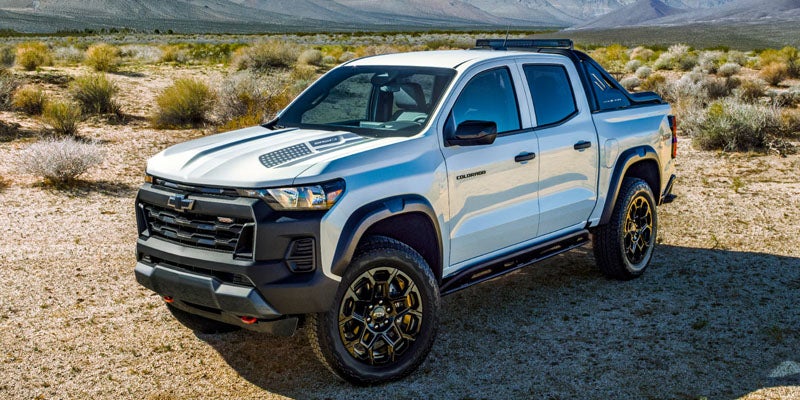
Silver Chevrolet Colorado parked on rocky desert terrain with mountains in the background.

Silverado vs. Colorado: Which Chevy Truck Is Right for You?

If you're in the market for a new Chevy truck, the Silverado vs. Colorado comparison will definitely come up. Both are capable, well-rounded pickups with Chevrolet credentials and reputations, but they're built for different kinds of drivers in Woodhaven, Michigan. Understanding what sets them apart can help you make a confident decision before you ever set foot on the lot. Size and Daily Drivability The Chevy Colorado is a midsize truck, which makes it a natural fit for drivers who want truck versatility without the bulk of a full-size pickup. It's easier to maneuver in tight parking lots, city streets, and narrower jobsites. For drivers in Woodhaven, MI who commute regularly or need a truck that doubles as an everyday vehicle to pick the kids up at school and run errands, the Colorado's more compact size can be a real advantage. The Silverado is a full-size pickup with a larger cab, more interior space, and a more commanding presence on the road that translates to greater capability in some areas. If you regularly transport passengers or need maximum cargo room inside the cabin, the Silverado's extra dimensions pay off quickly. Capability and Towing When it comes to work-ready capability, the Silverado vs. Colorado comparison gets interesting. The Colorado is no lightweight—it’s purpose-built to handle off-roading with 3 dedicated trims and a special edition with class-leading performance to overcome anything. The Colorado’s standard TurboMax™ engine was built to keep up with its larger siblings, generating 310 hp and a Best-in-Class 430 lbs.-ft. of torque. That enables an impressive 7,700-lb. towing capacity—perfect for small trailers, rec vehicles, and weekend projects. The Silverado is engineered for drivers who need more muscle on a regular basis. It provides not only that TurboMax™ engine option, but a pair of V8 options that top out at 420 hp and 460 lbs.-ft. of torque. The real all-star might be the Duramax® Turbo-Diesel, though. With its strong low-end torque it can tow up to 13,300 lbs. and offers Best-in-Class highway fuel economy at 28 MPG, making it perfect for long hauls and diverse conditions. The Silverado is the better choice if you're consistently pulling a boat, camper, or work trailer. When heavy-duty hauling is part of your routine, the full-size Chevy Colorado vs. Silverado comparison tips firmly in the Silverado's favor. Technology and Features Both trucks offer a strong suite of modern technology. The Colorado comes standard with Google Built-in, bringing the ease of voice commands, Google Play, Google Maps, and Google Gemini AI assistant—all without need for your phone. The Silverado’s tech is more extensive, with a larger 13.4” available touchscreen, more extensive trailering technology and camera angles, and available Super Cruise® hands-free driving with trailering. Both come equipped with a vast suite of safety and driver assistance features. Chevy has done a solid job of bringing tech that was once reserved for premium vehicles into both of these truck lineups. The Silverado does offer a broader range of trim levels and option packages, which means more ways to customize your setup. Whether you want a straightforward work truck or a fully loaded cabin with premium materials, the Silverado's lineup gives you more room to build exactly what you want. Which Truck Is the Better Value for You? Choosing between the Chevy Colorado vs. Silverado really comes down to how you plan to use the truck day to day. If you want an agile, efficient midsize pickup that's easy to park and great for weekend adventures, the Colorado starts at a very approachable starting price. If you need a full-size workhorse with greater towing capacity and a more spacious interior, the Silverado delivers on every front. Neither truck is a wrong answer—they simply serve different drivers with different priorities. Find Your Next Chevy Truck at Michael Bates Chevrolet The Silverado vs Colorado decision is easier when you can see both trucks side by side and talk through your options with someone who knows the lineup inside and out. Michael Bates Chevrolet is here to help drivers find the right fit. Visit michaelbateschevy.com or stop by to explore current inventory and available offers serving the Woodhaven, Michigan area.